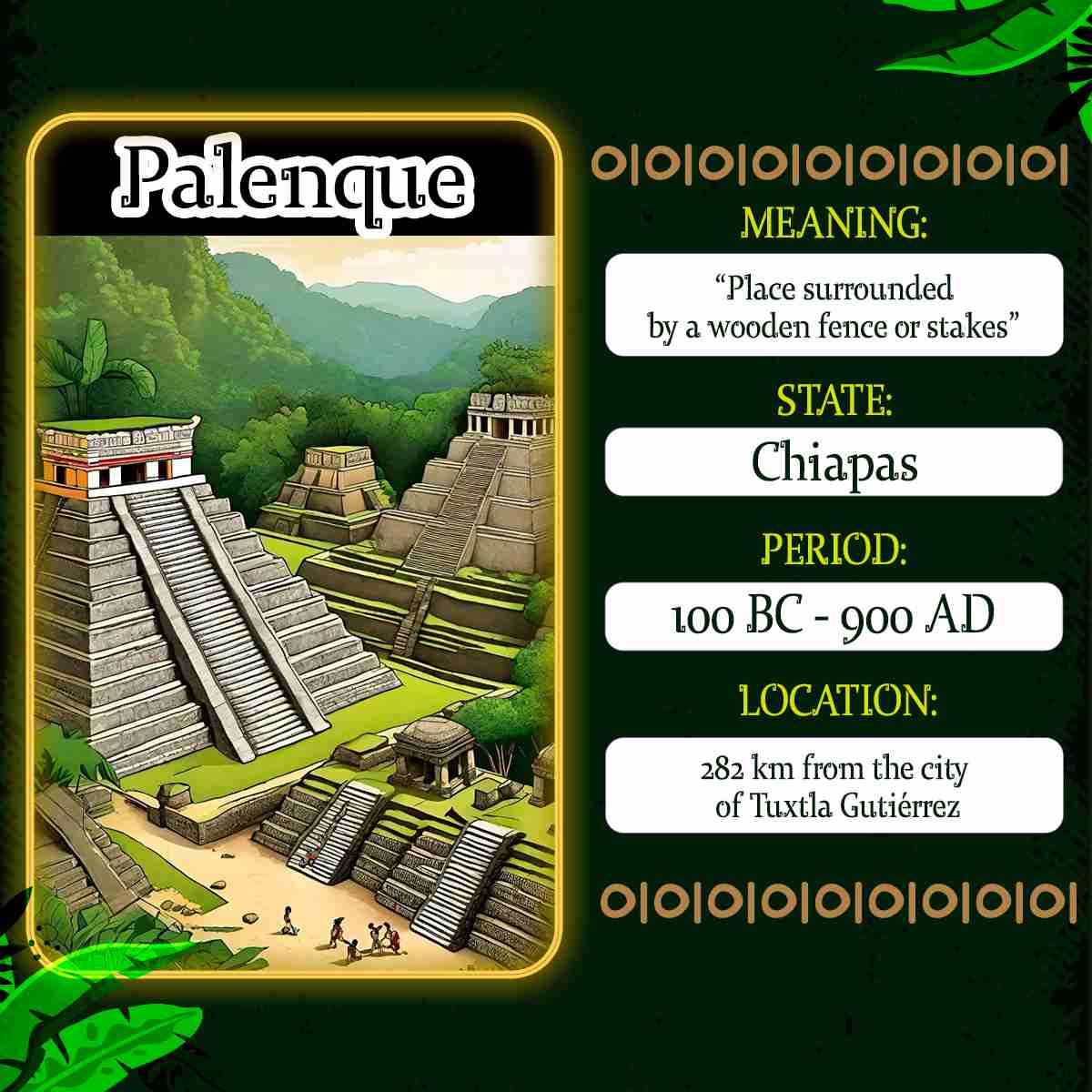


Palenque is a dazzling city that flourished mainly between the years 400 and 900 AD. It remained hidden in the jungle for many centuries.
It was the epicenter of a powerful dynasty to which the notable King Pakal belonged.
This archaeological site is home to imposing temples, palaces, plazas, tombs and sculptures, as well as hieroglyphic inscriptions that narrate the rich history of the place. Designated a World Heritage Site in 1987, Palenque stands out as one of the most relevant cities of the Classic period in the Mayan area, which spanned from 250 to 900.
The evolution of Palenque is fascinating, initially beginning as a village of farmers and hunters to transform over time into the capital of an influential dynasty that ruled an extensive region. The vestiges of its power are manifested in platforms, ceremonial complexes, plazas, palaces, aqueducts, mausoleums and housing units. These architectural complexes provide valuable information about the political-administrative, ritual and residential functions that characterized this magnificent city.
Around the year 800, it is estimated that the population of Palenque reached around 8,000 inhabitants. However, from that moment on, the city experienced a gradual decline and, a century later, was abandoned.
Although the precise reasons for its fall are still a matter of speculation, Palenque remains a stunning testament to the splendor and complexity of the Mayan civilization.
Did you know...?
The abundant deposits of limestone in the surroundings of the city provided the raw material for the construction of buildings, the elaboration of stucco and the creation of texts and images that decorated the interior of the temples, as well as for the manufacture of utensils for use. daily as metates and mortars.